
Resources12 August 2026
What land clearing actually costs, and what changes the number
Nobody can price clearing off a phone call alone. Here is what a contractor is actually looking at when they walk your property, and which of it you can find out before you ring anyone.
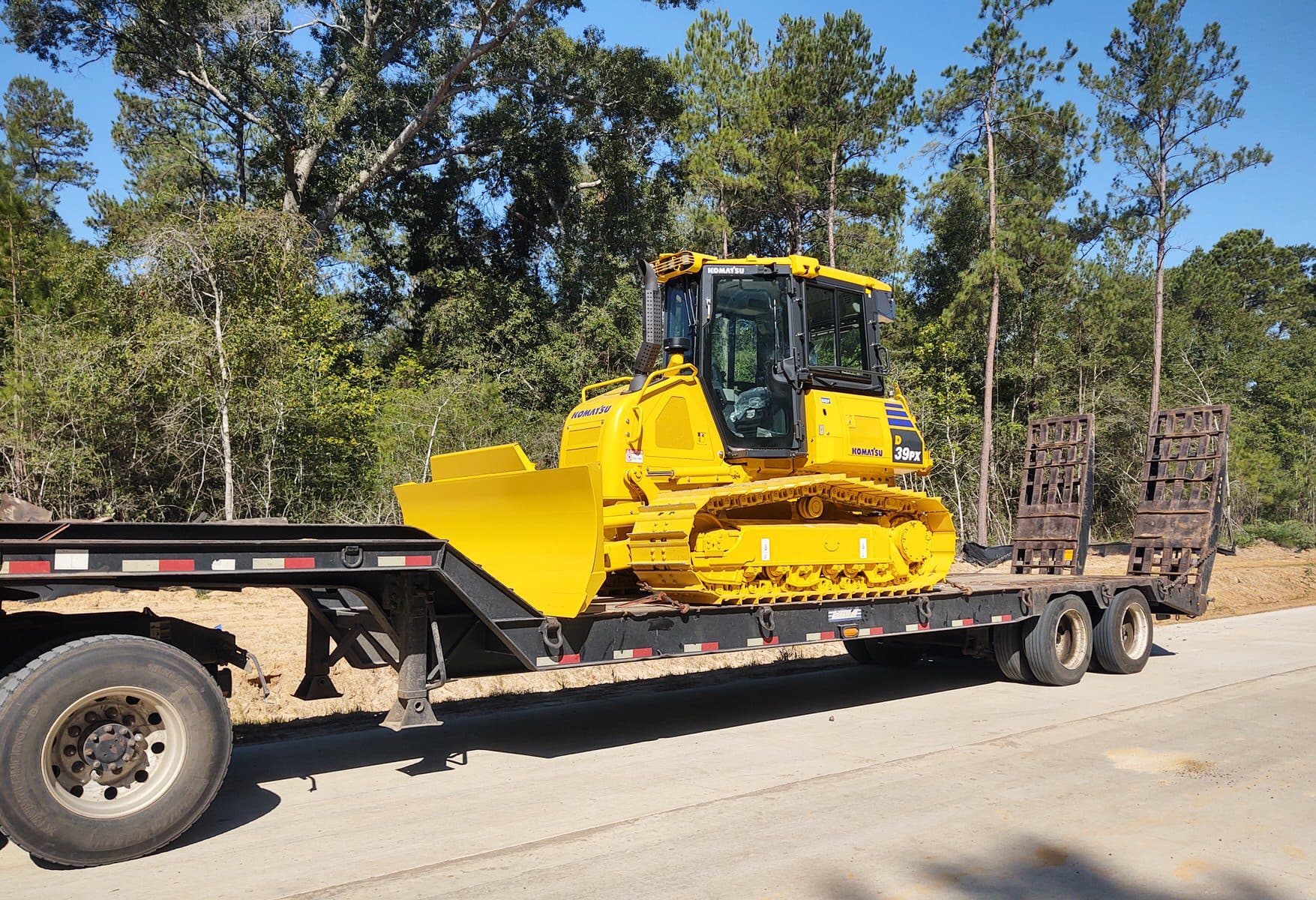
Every clearing quote comes down to five things, and none of them are the acreage on its own. An acre of light brush and an acre of mature pine are not the same job and will not be the same price.
Timber density and size. Light brush and saplings can be mulched in place quickly. Mature hardwood and pine take longer, need bigger equipment, and produce a great deal more material to deal with. Two properties on the same road can differ by several times on this alone.
What happens to the material. Mulching in place is the cheapest answer and leaves the organic matter on your land, which suits an acreage owner who wants pasture. If a building pad is going in, mulch is the wrong answer, because you do not want organic material buried under fill where it will rot and settle. Then it has to be hauled off, and haul-off is priced by the load and the distance.
Stumps. Cutting flush is quick. Grubbing the root ball out is slower and it is what you need if anything is going to be built or driven on afterwards. A stump left in the ground under a pad is a hole waiting to happen.
Access. If a lowboy cannot get equipment onto the property, everything gets more expensive. Narrow entrances, soft shoulders, overhead lines across the gate and low bridges all change the machine we can bring, and a smaller machine means more days.
Ground conditions. After a wet stretch, clearing a site does more harm than good. Working saturated ground ruts it badly, and you end up paying to repair damage that did not need to happen. We would usually rather move a start date by a week.
What you can find out before you call. Roughly how many acres, whether it is brush or timber, whether you want the material gone or mulched on site, and whether there are utilities crossing the property. Those four answers get you a far more useful conversation, and often a same-week site visit rather than a guess.
Tell us about the site.
Two ways in, depending on how far along you are. Either one reaches the office in Crosby, not a call centre.
5.0 on Google