
Subgrade treatment and compaction
Soil compaction and stabilization.
Some ground will carry what you want to put on it and some will not. Compaction and stabilization are the two ways of changing that answer.
Blending and mixing
Lime treatment
Cement treatment
Asphalt treatment
Compaction to density
Proof rolling
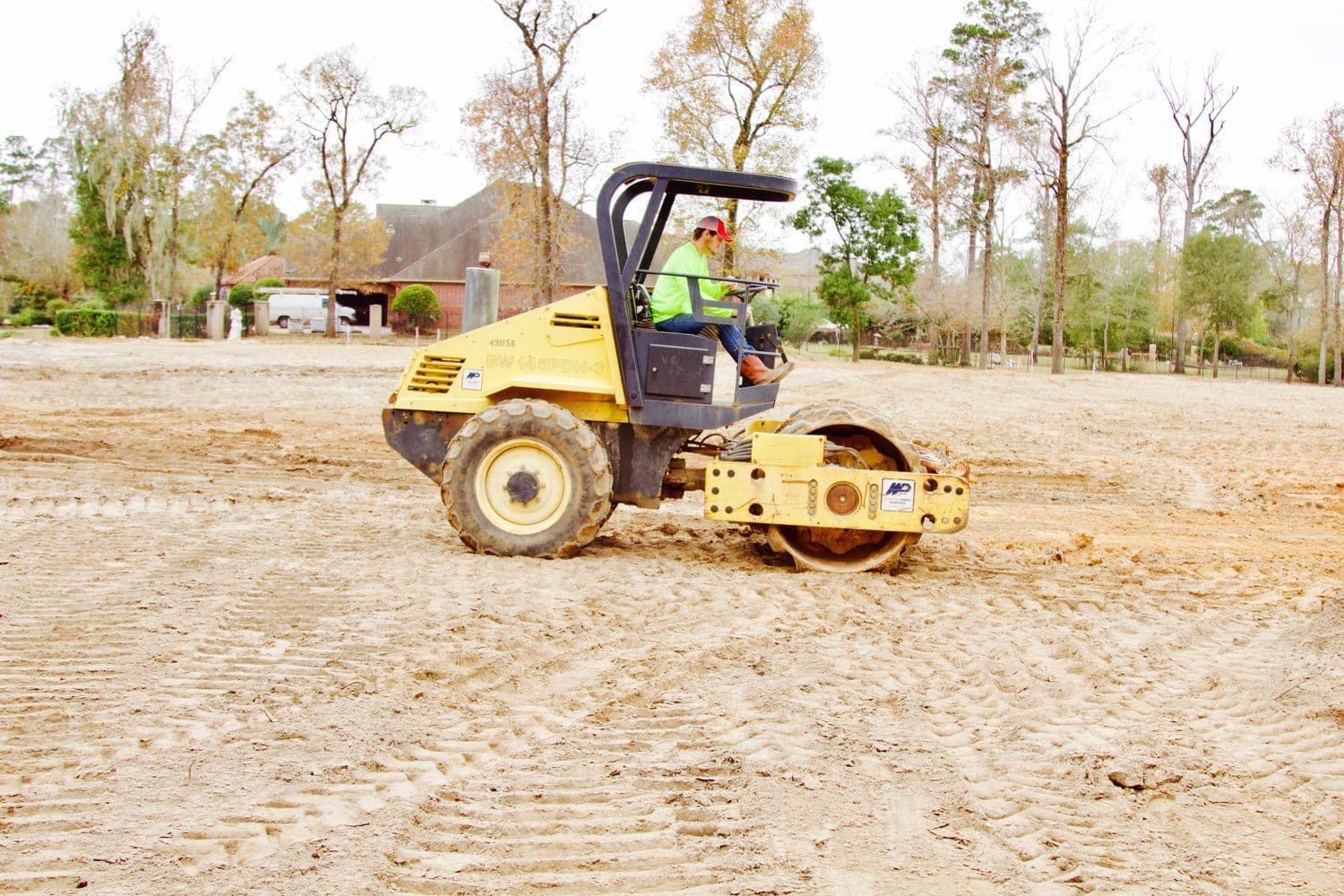
You cannot build on ground that moves.
Compaction and stabilization get confused with each other and they are not the same thing. Compaction takes the air out of soil you already have, so it carries load and sheds water instead of holding it. Stabilization changes what the soil is, by mixing something into it, and it is what you reach for when compaction alone will not get you there.
Around here that usually means clay. Gulf Coast clay swells when it is wet and shrinks when it is dry, and no amount of rolling will stop it doing that. Lime is what turns it into something that behaves more like a silt and stops moving with the weather. On granular soil with little clay in it, cement does the equivalent job. Which one is right is a question about your soil, not a preference.
Stabilization is priced off what is actually in the ground, so on anything large a soils report pays for itself several times over. Without one, everybody is guessing at the lime rate, and guessing high is expensive while guessing low does not work.
Included in the scope
Blending and mixing
Uneven ground made consistent, either in the borrow pit or on site with a disc or a grader, so what you are building on is the same material throughout.
Lime treatment
Lime mixed into clay and silty clay. It changes the clay chemically within days, dries the ground out and stops the swell-and-shrink cycle that cracks slabs.
Cement treatment
Portland cement spread and mixed to a specified depth, then fine graded, watered and compacted. The right answer on granular soils with only minor clay content.
Asphalt treatment
Emulsion or cutback blended into granular soil where a durable, water-resistant sand base is what the job needs.
Compaction to density
Kneading, static weight, vibration or impact, whichever suits the material and the lift. Rolled in lifts and tested rather than eyeballed.
Proof rolling
The finished subgrade run over under load so any soft spot shows itself now, while it is cheap, and not under your slab later.
Soil compaction and stabilization, on real jobs.
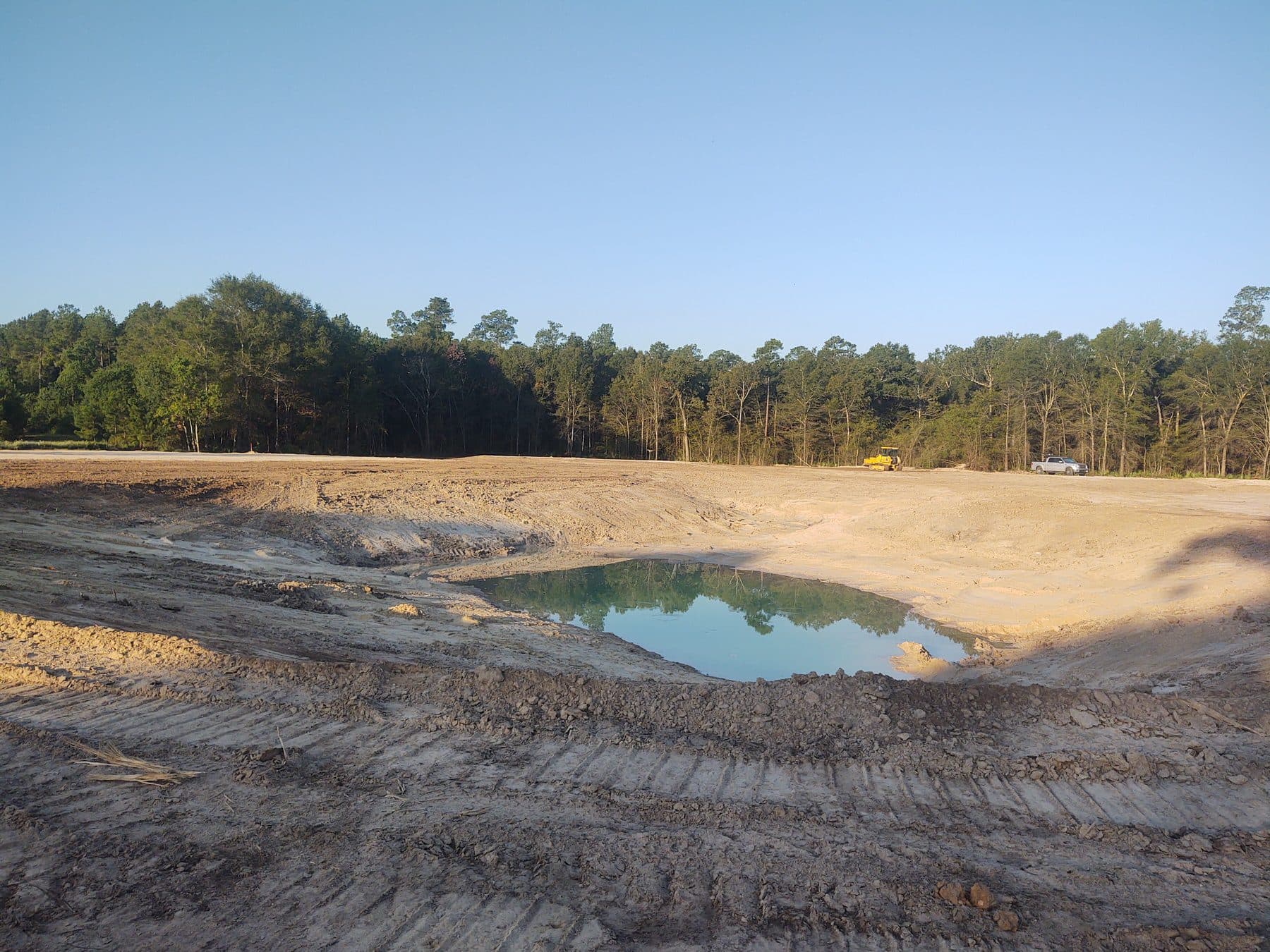
Every photograph below is a KGW site. Click any of them to see it full size.
Questions
What people ask before they call.
What is the difference between compaction and stabilization?
Compaction squeezes the air out of the soil you already have so it carries more load. Stabilization changes what the soil is, by mixing lime, cement or asphalt into it. Clay that swells and shrinks with the weather will keep doing that however well it is compacted, which is when stabilization is the only answer.
Do I need lime or cement?
It depends on the soil. Lime works on clay and silty clay, which is most of what we see around Crosby and Houston. Cement suits granular soils with only minor clay in them. On a job of any size a soils report tells you which, and at what rate, rather than us guessing.
How deep do you treat?
It is specified by the engineer for the job and typically runs from six to twelve inches for a building pad or a subgrade. We mix to that depth, fine grade, water and compact it.
Can you do this on a site you did not clear or excavate?
Yes. It is often the only part of a job we are asked for. We would still want to walk it first, because what happened to the site before we arrived changes what the ground needs.
Tell us about the site.
Two ways in, depending on how far along you are. Either one reaches the office in Crosby, not a call centre.