
Soil compaction and stabilization
Site preparation and building pads.
The pad is the one part of the job nobody sees and everybody feels. Built to elevation, compacted in lifts, and drained so it stays where you put it.
Strip and proof roll
Select fill in lifts
Compaction
Stabilization
Elevation and shape
Testing access
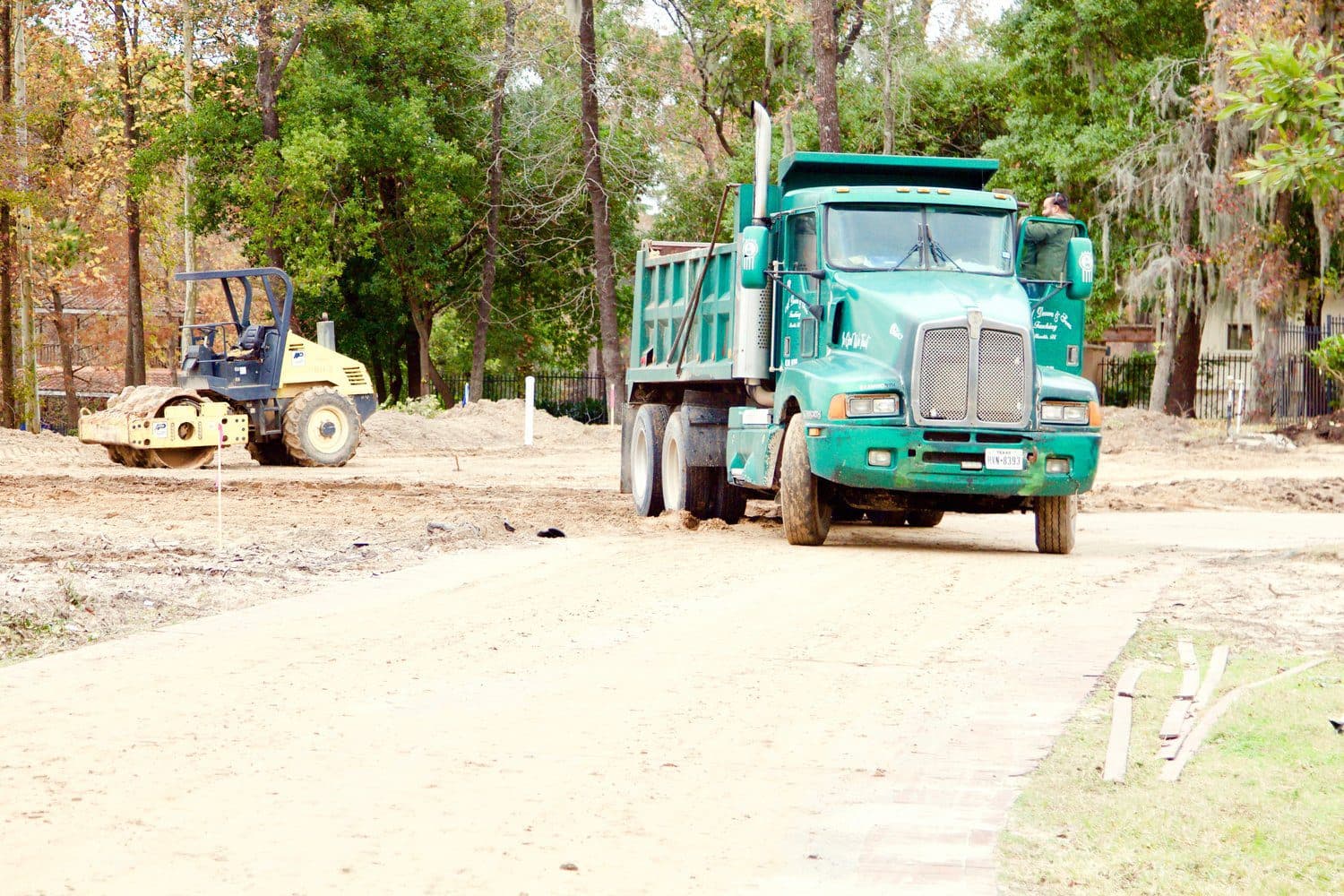
A pad is a structure, even though it looks like a pile of dirt.
Everything above it inherits whatever you get wrong here. Fill placed too thick to compact properly, a pad set an inch low, organic material buried where it will rot: none of it shows on the day and all of it shows in the slab two years later.
We build pads in lifts thin enough to actually compact, take the elevation off the plan rather than off eye, and shape the pad so water sheds off it instead of standing on it. Then we tell you what we did, so your engineer has something to test against.
We would rather a testing lab check our work than take our word for it. If your engineer wants densities, tell us up front and we will build the schedule around the testing.
Included in the scope
Strip and proof roll
Topsoil and organics stripped off, and the subgrade proof rolled before any fill goes down.
Select fill in lifts
Placed in lifts thin enough to compact all the way through, not just on top.
Compaction
Rolled to spec lift by lift, so density is achieved through the pad rather than at the surface.
Stabilization
Lime or cement stabilization where the native soil will not carry load on its own.
Elevation and shape
Set to the engineered elevation and crowned so the pad sheds water.
Testing access
We coordinate with your testing lab so densities are taken as the pad goes up.
Questions
What people ask before they call.
How high should my pad be?
That is a question for your engineer or your county, because it depends on the base flood elevation and the drainage plan for your area. We build to the number you give us and we will tell you if that number looks wrong for the site.
How long does a pad need to settle before we pour?
A properly compacted pad built in lifts is not waiting on settlement, it is waiting on your testing. If a pad needs months to settle it was not compacted properly.
Do you do lime stabilization?
Yes. Where the native clay will not carry load, stabilizing it is usually cheaper than digging it out and replacing it with select fill.
Site preparation and building pads, on real jobs.
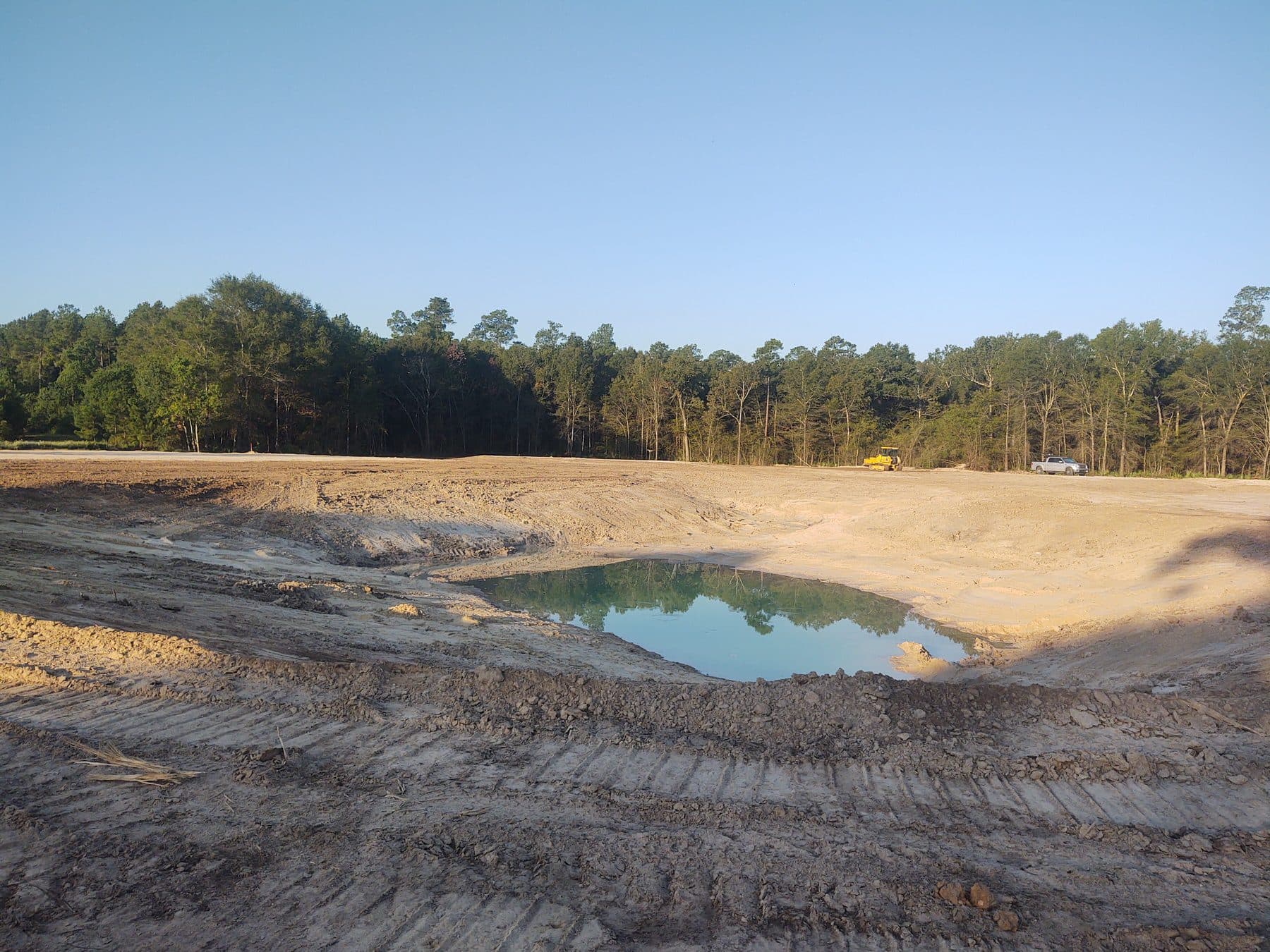
Every photograph below is a KGW site. Click any of them to see it full size.
Tell us about the site.
Two ways in, depending on how far along you are. Either one reaches the office in Crosby, not a call centre.