
Resources24 July 2026
Will my pond hold water? It depends on what is under it
The most common disappointment in pond building is a finished pond that drains away in a fortnight. It is nearly always a soils problem, and it is nearly always knowable in advance.
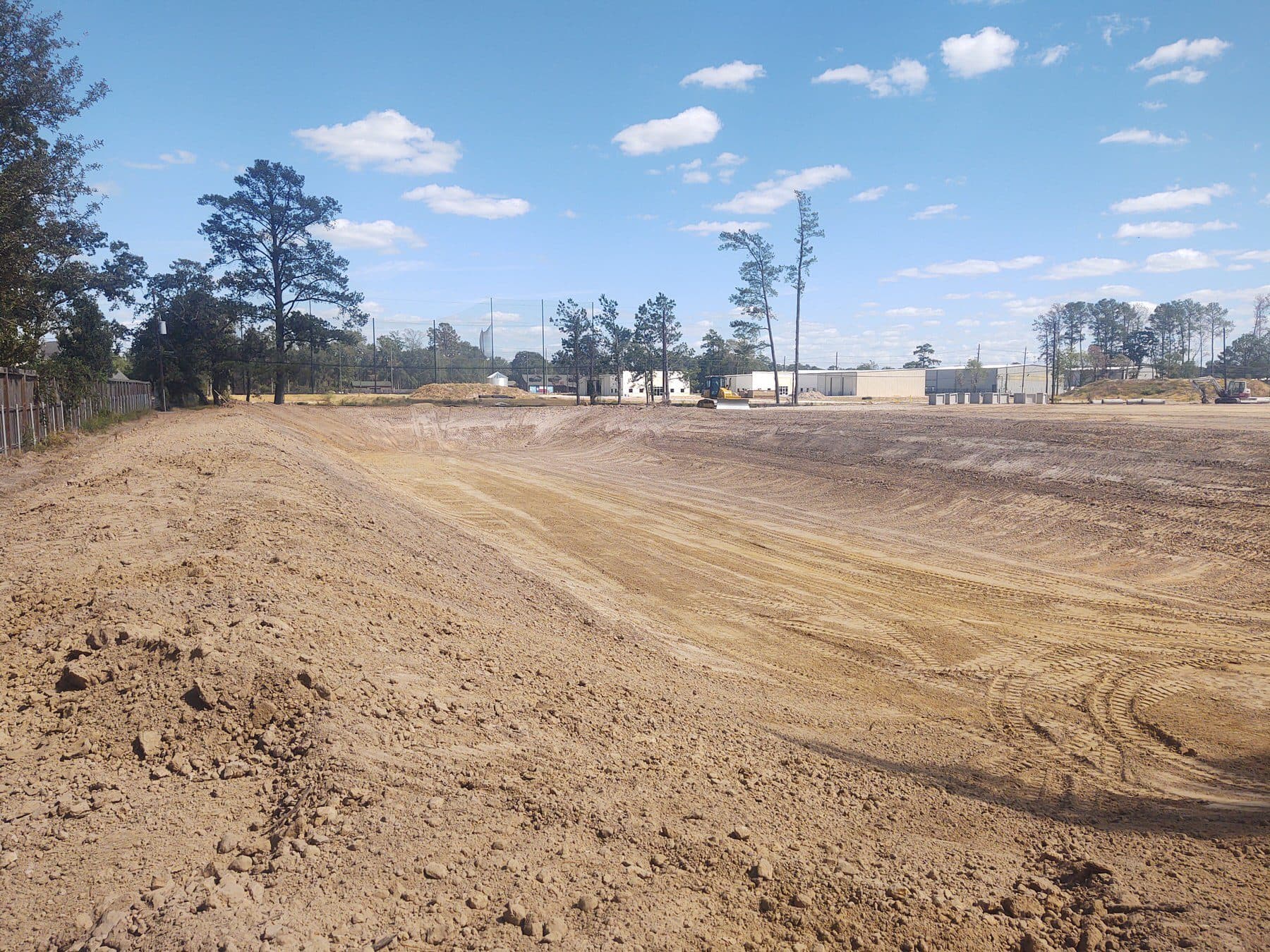
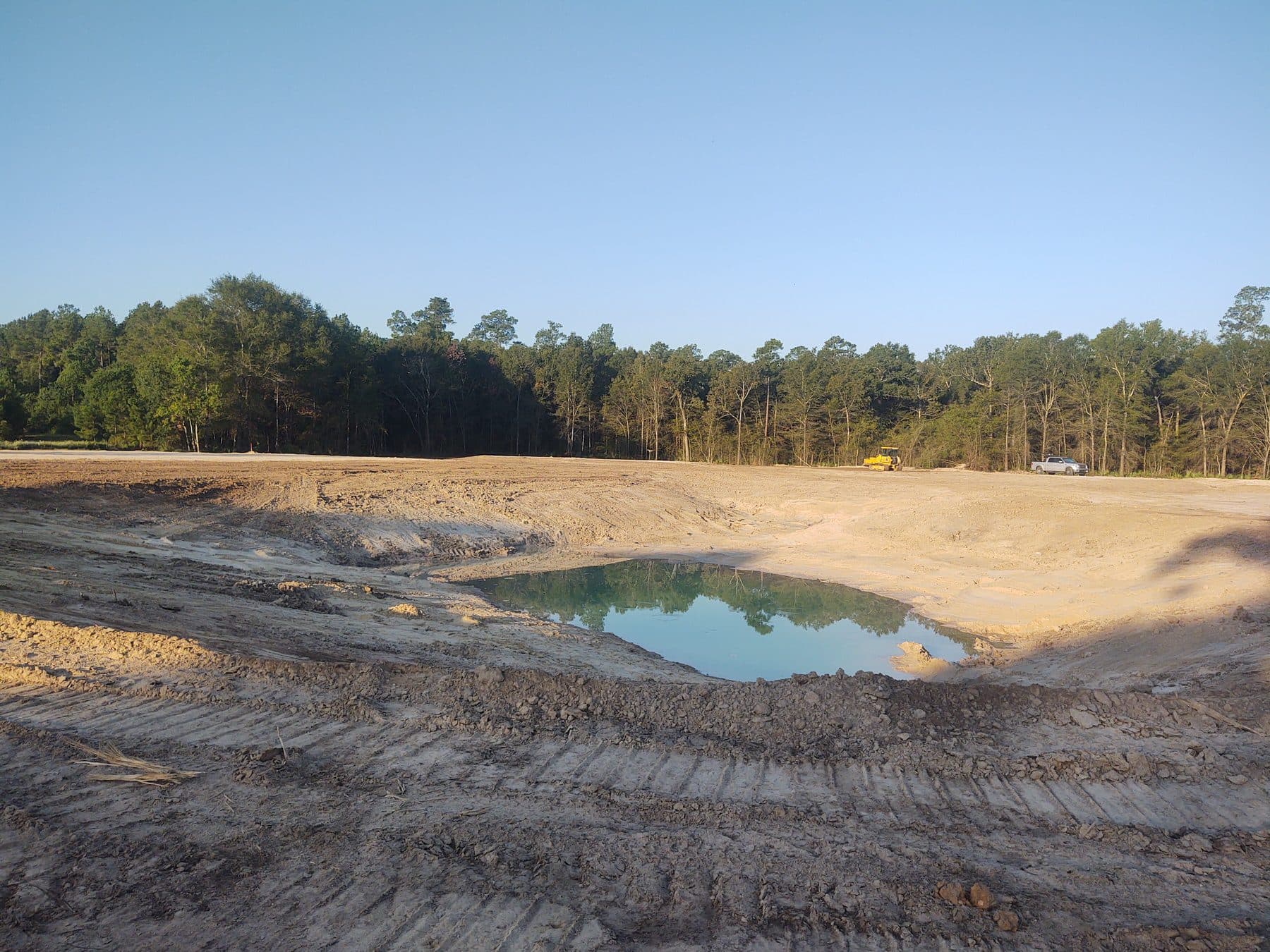
A pond holds water because of what is underneath it, not because of how deep it is. Dig the same pond in clay and in sand and you get a lake and a wet patch.
Around Crosby and the wider Houston area the soil varies enormously, sometimes within a single property. That is why the first question we ask about a pond is not how big you want it, but what the ground has done elsewhere on the place. An existing pond that holds, a stock tank down the road, a neighbour's experience: all of it tells us something.
The clay key. Where we find clay, we cut a key: a trench through the permeable layer into the impermeable one, backfilled with compacted clay, running around the pond. It ties the pond bottom into ground that will not let water through. Without it, water finds the sand layer and leaves.
Bank slopes. Banks cut too steep look efficient on the day and slump into the pond in the first hard rain. Laid back properly they hold, they are safer, and you can mow them, which matters more than people expect on an amenity pond.
The spillway. Every pond needs somewhere for the water to go in a storm bigger than the one it was designed for. An emergency spillway, cut wide and stabilised, is what stops an overtopping event from cutting through the dam and taking the whole thing out.
Where the dirt goes. This is often what decides whether a pond is affordable. A pond produces a lot of spoil, and hauling it away is expensive. If that dirt can become a building pad, a driveway base or fill somewhere else on the property, the economics change completely. It is worth planning a pond and a pad at the same time for exactly this reason.
If a site looks marginal, we will say so. On a large or expensive pond, a soils investigation before you dig is cheap compared with finding out afterwards.
Tell us about the site.
Two ways in, depending on how far along you are. Either one reaches the office in Crosby, not a call centre.
5.0 on Google